
Wine for Dinner Party That Pleases the Table
The bottle that makes a dinner party work is rarely the one with the longest backstory. It is the one that feels right beside the food, gives guests something easy to enjoy, and lets the host return to the table instead of explaining every pour. Choosing wine for dinner party plans becomes much simpler when you focus on the meal, the guest list, and a small range of balanced bottles.
A thoughtful wine selection does not need to be complicated or overly formal. A bright white and a food-friendly red will cover many tables beautifully. From there, the menu can guide a few practical choices.
Start With the Food, Not the Label
The main course is the clearest place to begin. Think about its weight, flavor, and preparation. A lighter dish generally calls for a lighter wine, while a richer or more savory meal can hold its own beside a red with more depth. This is not a rulebook. It is simply a helpful way to keep wine and food from competing for attention.
For chicken, fish, vegetable dishes, creamy pasta, or a cheese-forward first course, Chardonnay is often a comfortable choice. Its texture can meet a richer sauce, while its freshness can keep a meal from feeling heavy. It is especially useful when the table includes guests with different preferences, since it feels at home with a wide range of dishes.
Cabernet Sauvignon is a natural fit for grilled steak, burgers, roast beef, lamb, and other savory meals with real depth. It can also work well with mushroom dishes or a hearty vegetarian entrée. The key is balance: a red should support the meal rather than make a delicately seasoned dish seem quiet by comparison.
If the menu moves across several courses, choose wines that can travel with it. A white that works with appetizers and the main course is more useful than a very narrow pairing. The same goes for a red that is enjoyable with the entrée but not overwhelming alongside a cheese plate or a late-night conversation.
Build a Wine for Dinner Party Plan Around Two Bottles
For most relaxed gatherings, offering one white and one red is the easiest path. It gives guests a choice without turning the table into a tasting lineup. This approach is especially helpful when you do not know every guest’s preference or when the meal includes both meat and vegetable dishes.
Choose a white with freshness and enough body for food, then a red that feels smooth, balanced, and comfortable with the main course. At SKS Cellars, Cabernet Sauvignon and Chardonnay make a natural starting point for this kind of table: two familiar styles made to be enjoyed with a real meal and shared company.
A third option can make sense when the menu clearly calls for it. Add a sparkling wine for a celebratory arrival, a rosé for an outdoor lunch, or a lighter red when the meal centers on salmon, pizza, roast chicken, or vegetables. But do not add bottles only because you feel you should offer more. Too many choices can create more hesitation than hospitality.
Let the Menu Lead When It Has One Strong Flavor
Some ingredients deserve special consideration. Spicy foods can make high-alcohol or very tannic reds feel more intense, so a fresh white or a lightly chilled, approachable red is often more comfortable. Dishes with a touch of sweetness, such as glazed ham or a fruit-based sauce, tend to work better with wines that are not aggressively dry or heavy.
Acidic dishes, including tomato-based pasta and citrusy seafood, often come alive beside a wine with bright freshness. Rich, buttery, or creamy dishes usually welcome a white with good structure or a red that is not overly lean. With salty foods such as cured meats, olives, and aged cheeses, both white and red can work well. Taste the food and wine together before guests arrive if you are unsure.
Plan the Pour Without Overthinking It
A standard 750 ml bottle holds about five five-ounce pours. That is a useful baseline, but dinner parties are not always measured in tidy servings. Some guests may prefer one glass, others may enjoy a second with the main course, and a few may choose not to drink wine at all.
For a seated dinner where wine is one part of the evening, plan roughly one bottle for every two to three wine-drinking guests. If the gathering lasts several hours or wine is the main beverage, one bottle for every two guests offers more breathing room. It is better to have a little left for the next meal than to find the table empty halfway through dinner.
Keep nonalcoholic options equally visible and easy to reach. Sparkling water, still water, and a thoughtful nonalcoholic drink make everyone feel included without calling attention to anyone’s choice. Good hosting is about offering comfort, not making assumptions.
Serve at a Comfortable Temperature
Temperature changes how wine tastes. Whites served too cold can seem muted, while reds served too warm can feel heavier than intended. Chardonnay is often best cool rather than ice-cold. Take it from the refrigerator a short time before dinner so its character has room to show.
Red wine is usually more enjoyable slightly cooler than a warm kitchen or dining room. If the bottle has been sitting on a counter all day, give it a brief rest in the refrigerator before serving. There is no need to chase a precise number. A little attention goes a long way.
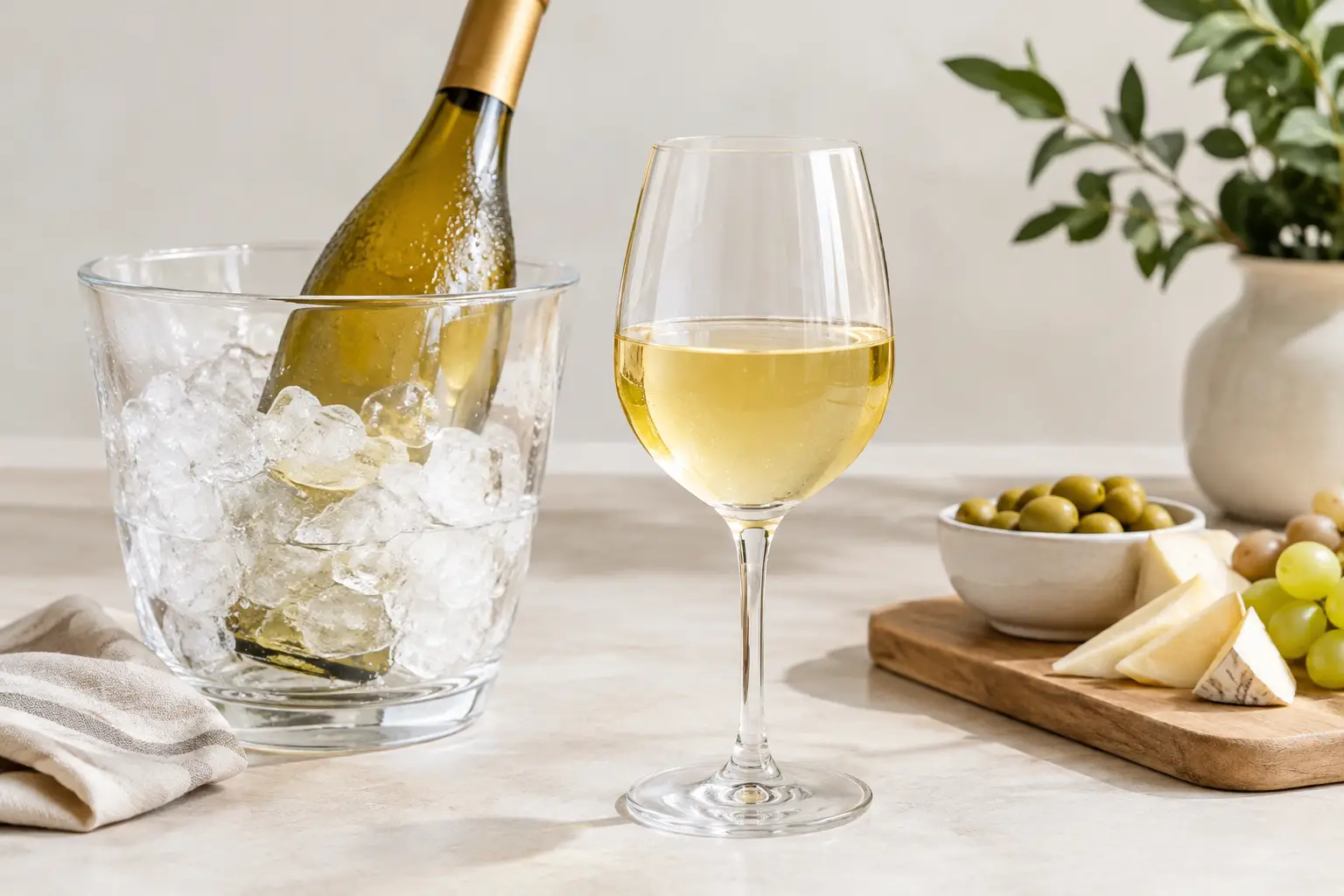
Open red wine shortly before guests sit down, especially if you want to taste it with the meal and decide whether it benefits from a few minutes in the glass. Open white wine in advance, keep it chilled, and bring it to the table in an ice bucket only if the room is warm. Simple preparation makes service feel easy.
Make Pairing Feel Welcoming, Not Formal
Guests do not need a lecture before the first course. A brief, friendly introduction is enough: “We have a Chardonnay for the starters and a Cabernet with dinner. Please try whichever sounds good.” That invitation leaves room for personal preference, which matters more than any pairing chart.
It also helps to pour modestly at first. Guests can return for more, and a smaller first pour lets them decide how the wine works with the food. If someone enjoys red wine with fish or white wine with steak, let that be the right choice for them. The best dinner parties make room for taste, conversation, and a little flexibility.
Glassware does not need to match perfectly. Clean, comfortable wine glasses are enough. If you have only one style, use it for both red and white. Spend your energy on a welcoming table, food you are happy to serve, and enough time to sit down with everyone once dinner begins.
A Few Menus That Make Choosing Easier
A grilled chicken dinner with roasted vegetables and a simple salad is a natural setting for Chardonnay, particularly when the dish includes herbs, lemon, or a creamy element. If guests prefer red, an approachable Cabernet can also work when the vegetables are roasted deeply or the meal includes mushrooms.
For steak, burgers, or roast beef with potatoes, Cabernet Sauvignon is an easy and satisfying direction. Add a fresh salad, grilled vegetables, or a tangy sauce to keep the plate balanced. A white can still belong at the table for guests who prefer it, especially during appetizers.
With pasta, let the sauce decide. Creamy pasta and vegetable-forward dishes often suit Chardonnay. Tomato sauces, sausage, meatballs, and mushrooms usually welcome a balanced red. For pizza night, serving both is a practical answer, since toppings can vary from light and fresh to rich and savory.
The most memorable bottle is not necessarily the most complicated one. It is the wine poured when the food is warm, the chairs are full, and no one feels rushed. Choose wines with the meal in mind, give guests an easy choice, and save a little space at the table for the conversation that follows.